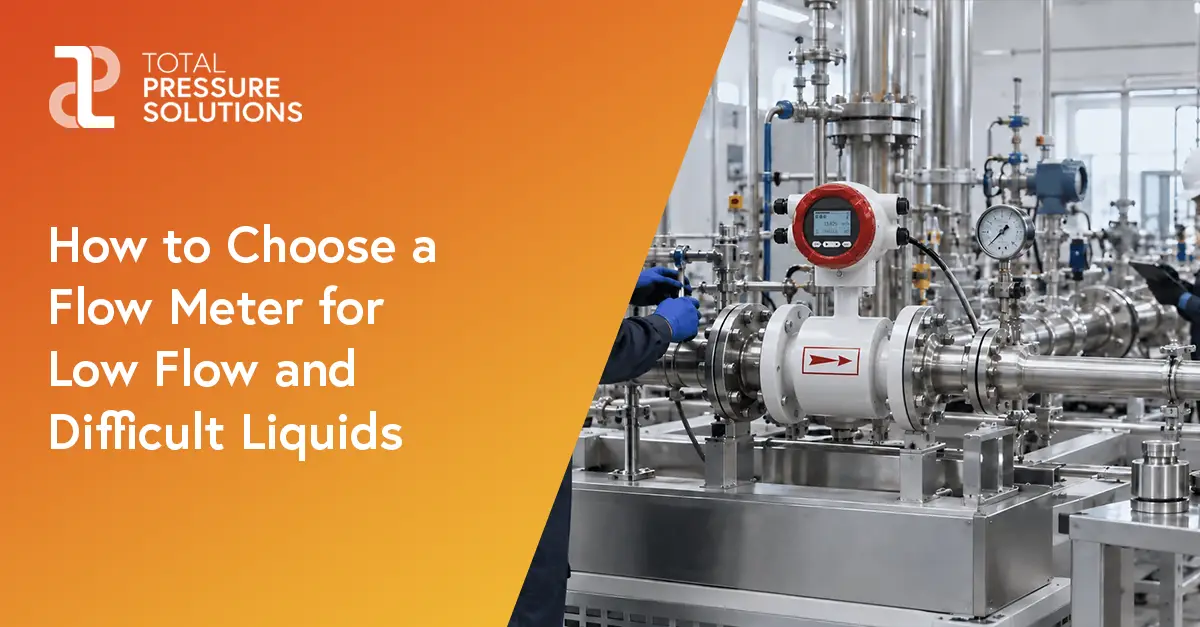
How to Choose a Flow Meter for Low Flow and Difficult Liquids
Very low flows, viscous liquids and gravity fed systems can be difficult to measure accurately. A flow meter that works well in a conventional water system may not be suitable for slow moving oil or chemical dosing.
For engineers and OEMs, selecting the right instrument means looking beyond pipe size. Flow range, viscosity, available pressure and required accuracy all influence which technology is worth considering.
Why Are Low Flows Difficult to Measure?
Not every flow meter is designed for small or slow moving quantities of liquid. Common challenges include:
- Low flow velocity: an oversized meter may struggle to register flow below its specified measurement range.
- Limited pressure: gravity fed systems may not have enough available pressure to overcome the meter's resistance.
- Viscous or corrosive liquids: thick oils and aggressive chemicals can affect measurement performance or require specific materials.
Understanding these conditions early helps narrow down the options.

Which Flow Measurement Method Should You Consider?
Different technologies offer different advantages depending on the liquid and operating conditions.
- Electromagnetic flow meters: suitable for conductive liquids, including water and compatible process chemicals. With no moving parts in the measuring tube, they introduce minimal additional flow obstruction. The Supmea A100 electromagnetic flow meter is one example, although conductivity and minimum velocity requirements must be checked.
- Positive displacement meters: can be suitable for viscous or non conductive liquids, such as oils. However, pressure loss must be considered, particularly in gravity fed systems.
- Coriolis flow meters: measure mass flow directly and can be useful where fluid density or mass measurement matters. Options such as the TPS-SUP-FCC300 Coriolis mass flow meter should be assessed against the required flow range and available pressure.
- Turbine flow meters: well suited to clean, low viscosity liquids with sufficient velocity. Models such as the TPS-FLC240 turbine flow meter are generally less suitable for extremely slow or highly viscous flows.
- Ultrasonic flow meters: clamp-on configurations offer non intrusive measurement, although performance depends on the liquid, pipework and operating conditions.
- Vortex flow meters: used with suitable liquids, steam and gases where sufficient flow velocity is available. The TPS-LUGB vortex flow meter is one example, but this technology is generally unsuitable for trickle flows.
For exceptionally small quantities, an inline meter may not always be the best solution. Gravimetric weighing or batch monitoring may offer a more practical alternative.
Don't Overlook Material Compatibility
For corrosive liquids, electrode, liner and other wetted material selection is just as important as the measurement technology.
Electromagnetic flow meters may offer materials such as 316L stainless steel, Hastelloy alloys, titanium or tantalum, depending on the configuration.
However, chemical compatibility depends on media concentration, temperature and operating conditions. Always verify suitability before final specification.
Need Help With a Challenging Flow Measurement Application?
If you’re measuring viscous oil, monitoring chemical dosing or dealing with an existing meter that isn't delivering reliable readings, Total Pressure Solutions can help assess your application and identify suitable instrumentation.
Our team works with engineers and OEMs to review operating conditions, measurement requirements and tailored configurations where needed.
Explore our flow meter range or contact the TPS team to discuss your requirements.
Contact Us
Have questions or need more information about our products? Our team is here to help. Fill out the form, and we’ll get back to you shortly.


